A Casino-Themed Project Plan Built Around a Creative Brief
A casino-themed project plan helps FPTU students shape a campus media concept, assign roles and deliver a coherent creative brief without building a betting product.
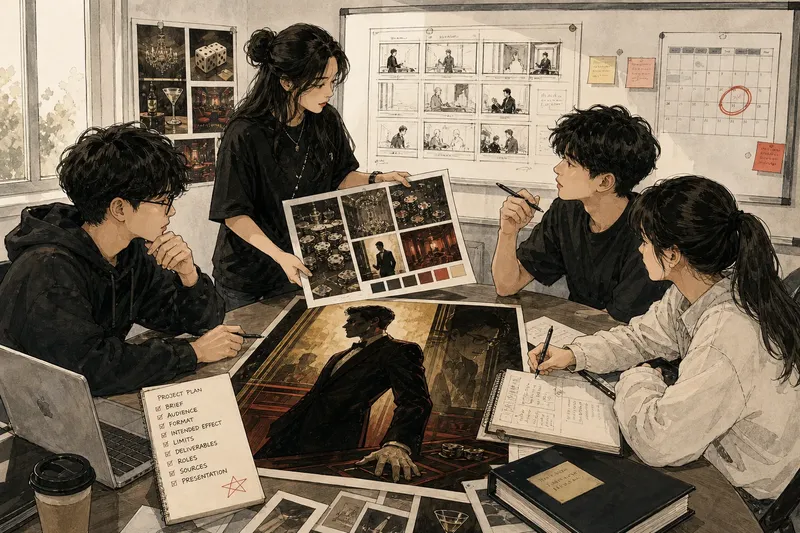
A team sits in an FPTU studio with a blank storyboard, a folder of reference images and a deadline on the course calendar. A casino-themed project plan can turn that pile into a creative brief for a poster, short film or game scene, with each choice tied to a clear purpose.
A casino-themed project plan needs a defined audience
Start by deciding who the finished work is for and what you want that audience to notice. A campus exhibition visitor, a class viewing a short film and a player seeing a fictional game screen will approach the same imagery differently.
Keep the project’s purpose separate from the setting. A casino can provide a visual environment for a story about ambition, performance or social pressure; it does not require real-money betting or a functional gambling mechanic. State that boundary in the brief so nobody spends time designing a feature the project does not need.
Write a compact creative brief containing the audience, intended effect, format and limits. For example: “Create a short fictional scene for a student showcase in which a character performs confidence in a casino-like lounge; show the gap between appearance and private uncertainty; include no betting interface.”
Build a production plan around deliverables
Break the work into outputs the team can review: a reference board, a script or storyboard, a draft artefact and a short rationale. Each deliverable should have a named owner, a hand-off point and a decision it enables.
- Reference board: collect permitted images, colour samples and typography examples; if a source cannot be credited or used under course rules, replace it before the board is shared.
- Storyboard or script: map the scene’s sequence and dialogue; if the purpose is unclear in a panel or line, revise it before production.
- Visual or audio draft: assemble the main elements in a working format; if the result depends on an unavailable asset, substitute an accessible one.
- Rationale: explain how the creative choices serve the brief; if a choice has no stated purpose, remove it or give it a reason.
- Presentation file: prepare captions, credits and a readable version for class; if any contribution or source is missing, resolve that before submission.
Use a shared folder with clearly named files and a simple change log. A team can lose an afternoon to “final_final_revised” without needing a more ambitious project.
Assign roles without building a miniature bureaucracy
Useful roles include creative lead, writer, visual designer, sound editor and production coordinator. One student may hold more than one role, but every deliverable needs a person responsible for moving it forward.
Agree how the group will make decisions. The creative lead might resolve visual consistency, while the whole team reviews whether the work still fits the brief. If a disagreement concerns a specific choice, compare the options against the audience and intended effect rather than voting on which one sounds more impressive.
Turn the brief into a sequence of decisions
Imagine an invented FPTU group of four students making a fictional poster for a campus screen-culture display. They begin with a brief for one poster, one audience and a theme of performed confidence. One student gathers permitted references; another drafts three thumbnail layouts; a third checks the wording and credits; the fourth assembles the chosen design in Canva and keeps the files organised.
The group compares the thumbnails against the brief and chooses the layout that makes the character’s public pose and private hesitation legible. They remove a decorative roulette wheel because it draws attention away from that contrast, then add a credit line for the typeface source. The resulting decision is a single poster with a clear visual idea, while the trade-off is less decorative detail. These are invented project choices, not claims about what a real class produced.
Check the production plan before making the final artefact
Use visible conditions to decide whether work is ready to continue. Each item should lead to an action, not merely a tick.
- Brief: If the audience, format or intended effect is missing, revise the brief; otherwise use it to judge proposed content.
- Scope: If a proposed feature requires a separate product or an unexplained betting mechanic, remove it or rewrite the concept as fiction; otherwise keep it within the stated deliverable.
- Assets: If an image, sound or font has unclear permission or attribution, replace it or ask the instructor how to proceed; otherwise record its source in the project file.
- Roles: If a deliverable has no named owner, assign one before work continues; otherwise confirm the owner knows the hand-off point.
- Draft: If a viewer cannot identify the main idea from the current draft, revise the hierarchy, wording or sequence; otherwise proceed to the next review.
- Feedback: If comments conflict, compare each suggestion with the brief and choose the one that serves its stated purpose; otherwise apply the agreed revision.
- Presentation: If credits, captions or required course details are absent, add them before submission; otherwise prepare the final file in the required format.
Course formats at FPTU can vary, so confirm submission rules and any approval needed for audience participation with the instructor.
Which production questions should the team settle?
What can a casino-themed student project make?
It can produce a poster, storyboard, short fictional scene, sound piece or interface concept, depending on the assignment. Choose a format the team can complete and present within the course requirements.
How can the work avoid looking like an advertisement?
State the project’s purpose plainly and avoid calls to gamble, claims about earnings or promotional language. Let the creative choices serve the story or design question instead.
What should happen when a team member misses a hand-off?
Identify which deliverable is blocked and agree on a replacement owner or a smaller version of the task. Record the revised decision so the same file does not quietly acquire three competing versions.
How much explanation should accompany the finished work?
Include enough to connect the audience, creative intention and visible choices. A concise rationale can explain a design decision more clearly than a long speech about how much work went into it.
Present the artefact with its production logic
Show the finished work alongside the brief, selected development material and source credits. Explain which choices survived review and which were changed, then identify any limitation that affects how the audience should read the result.
A casino-themed project plan is most useful when it leaves the group with a clear next decision at every hand-off: what to make, who owns it and what must be true before it moves on. That small discipline lets the creative work take centre stage without requiring the team to invent a casino in the process.